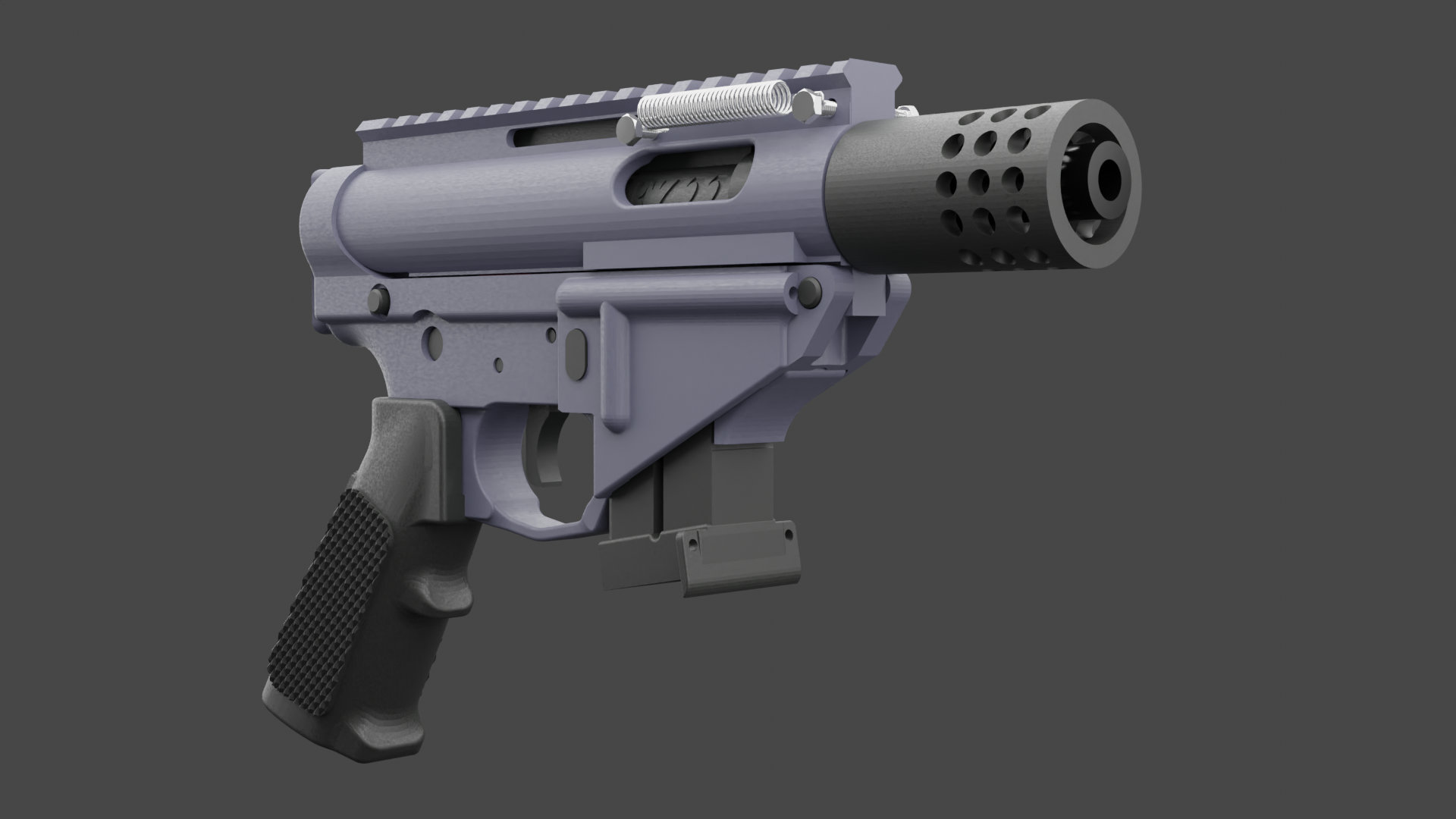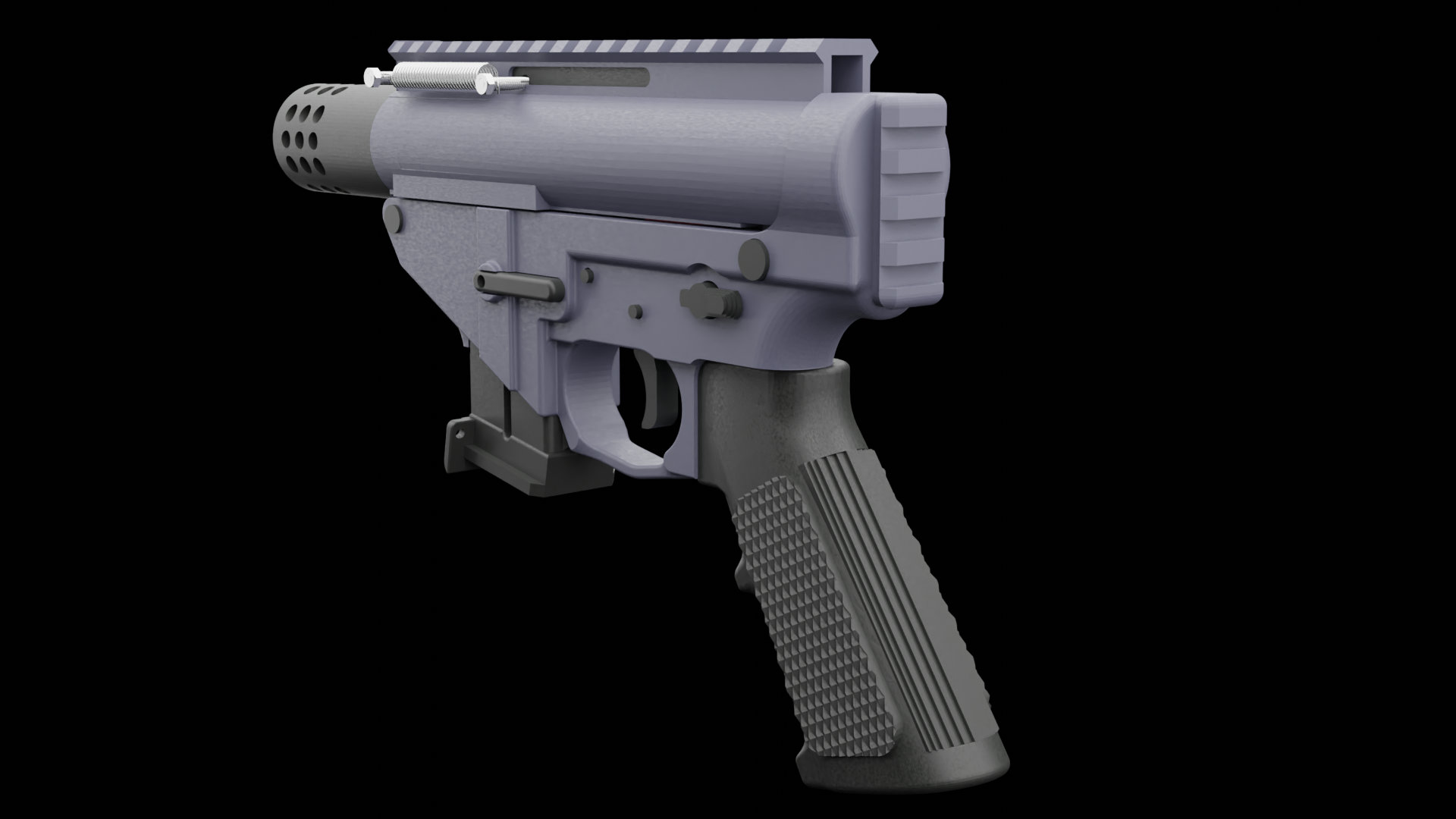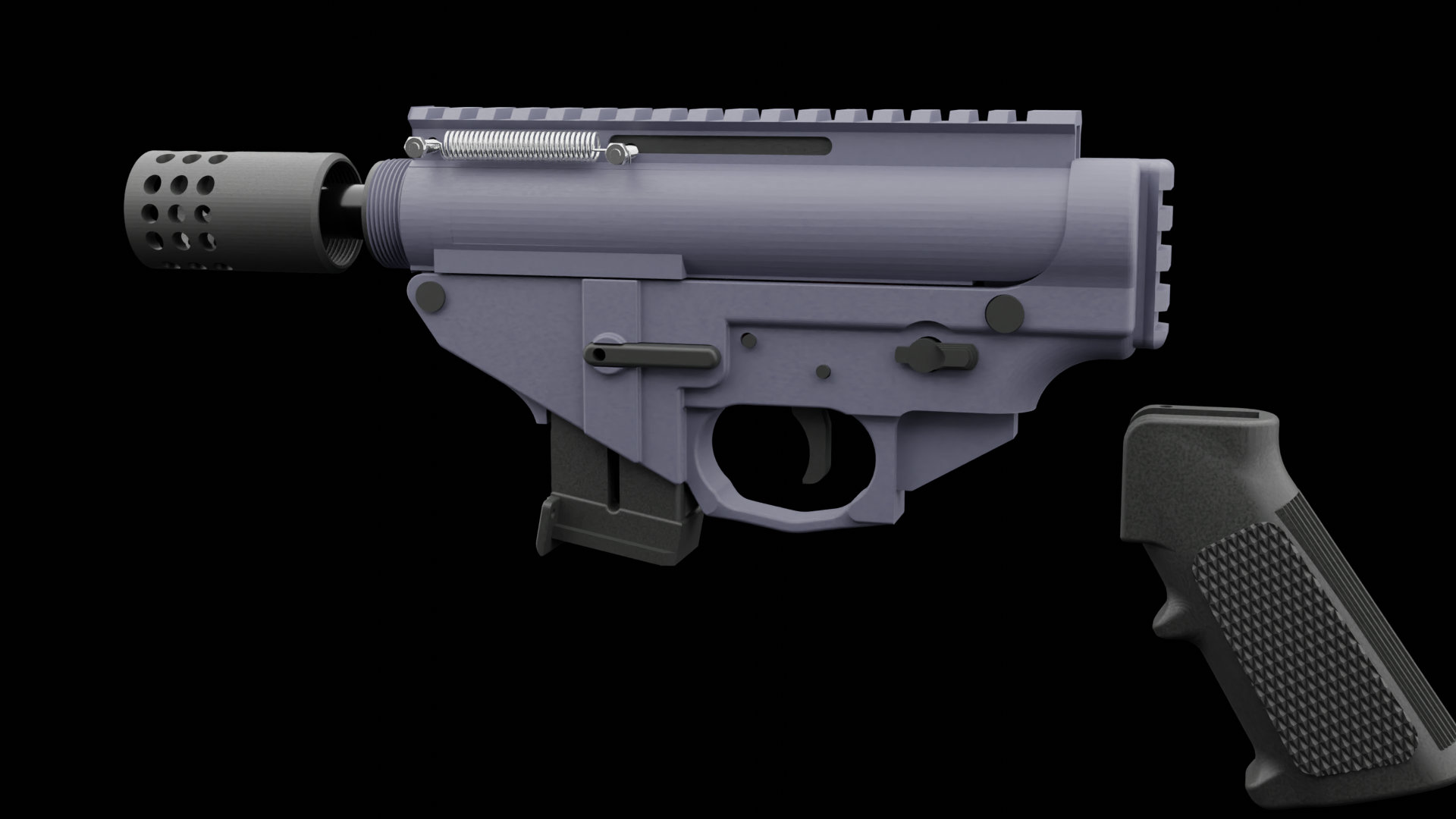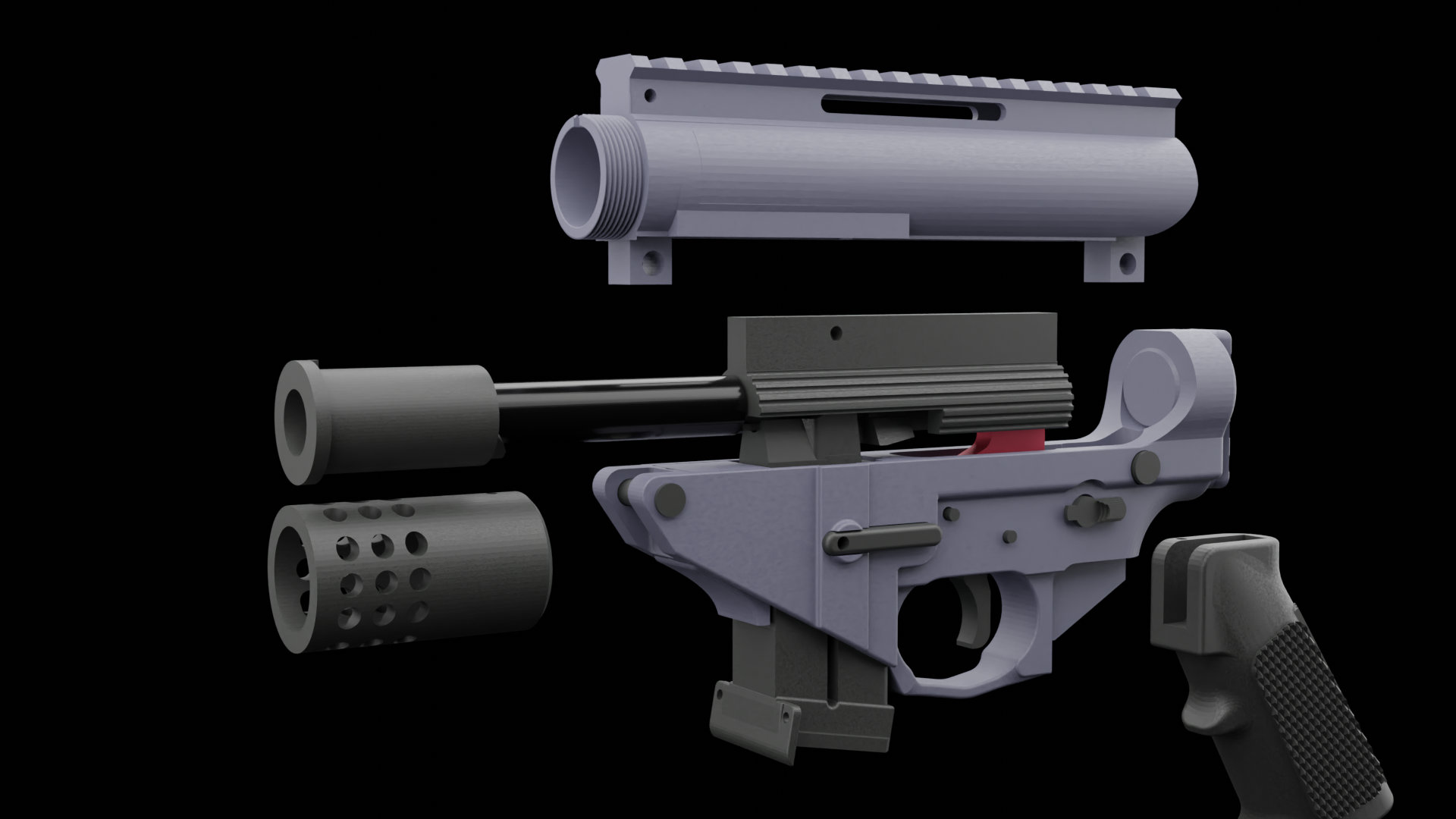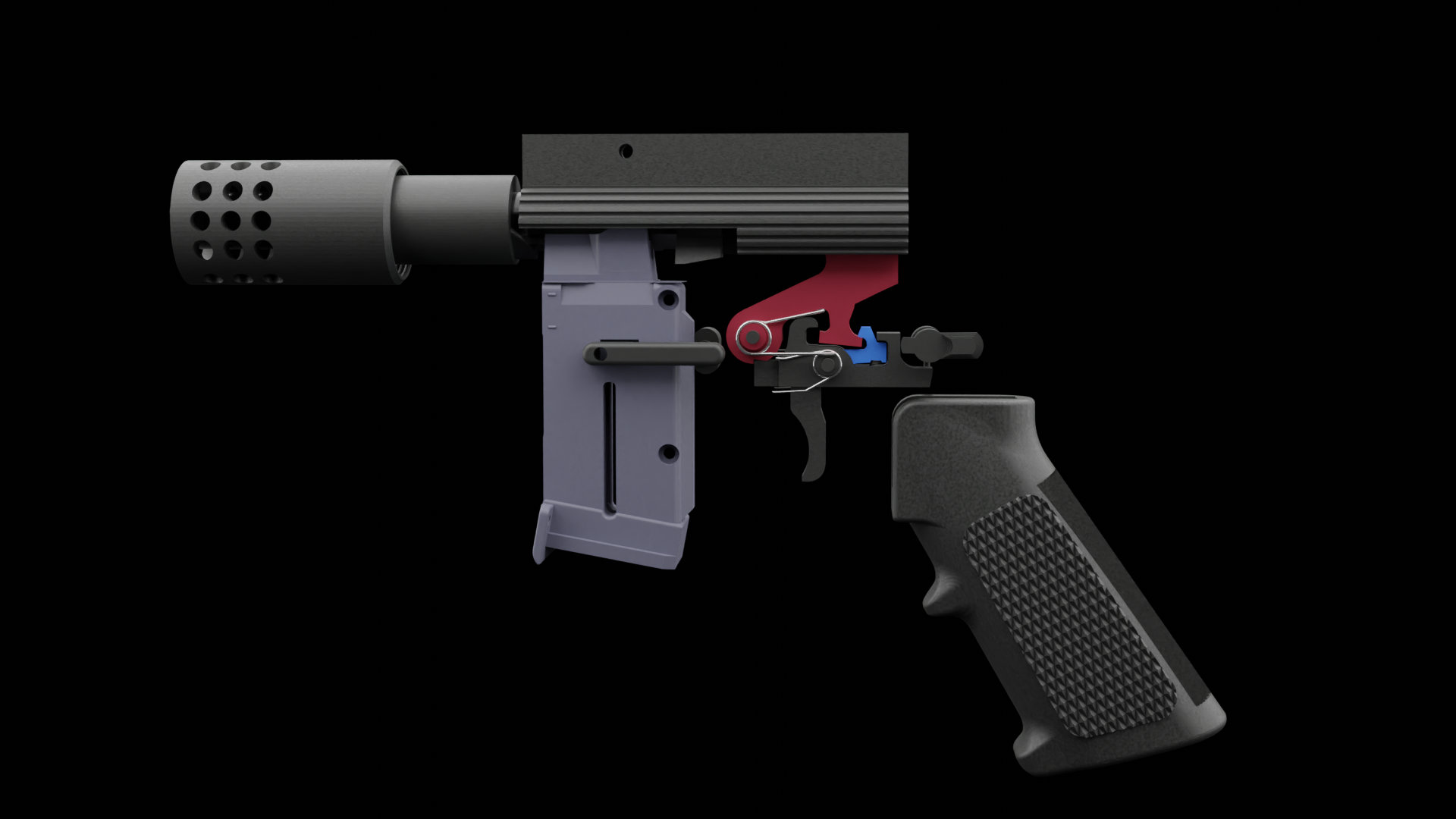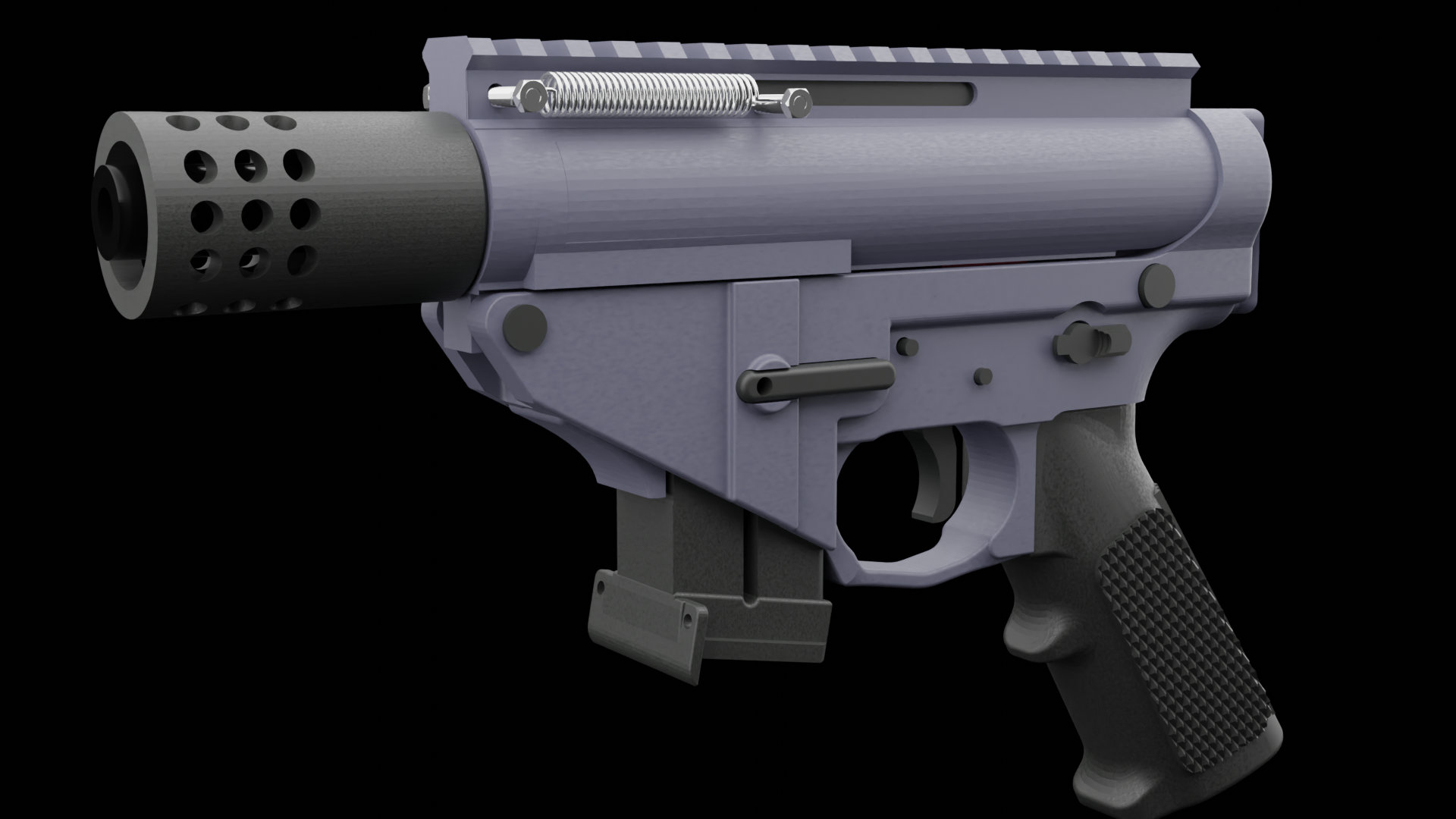
Bufferless System: Unlike standard AR-15 platforms that rely on a buffer tube and spring assembly in the stock, the EZ22 houses its entire recoil mechanism within the upper receiver. This makes it a highly compact, self-contained system.
Breech and Bolt Design: Because standard 3D-printed plastics cannot survive the direct friction and heat of centerfire cartridges, the EZ22 is built specifically around the .22 Long Rifle (.22LR) rimfire cartridge. The .22LR generates significantly lower chamber pressures (typically under 24,000 PSI) compared to 9mm or 5.56mm rounds, allowing polymer structures to survive the initial energy release.
DIY Hardware Integration: Academically, the file set is notable because it avoids specialized gun parts. It is engineered to utilize common hardware-store components—such as steel hardware store springs, headless bolts for firing pins, and a metal barrel liner (such as a Chaszel or generic seamless steel tube)—to ensure structural integrity where pressure is highest
Material Science & Slicing Optimization
In additive manufacturing coursework, files like the EZ22 are used to demonstrate how anisotropy (the directional weakness of 3D prints along the Z-axis) affects mechanical stress. [1]
- Material Selection: Standard PLA is brittle and prone to catastrophic shattering under sudden shock. Designs like the EZ22 require PLA+ (Polyactic Acid blended with impact modifiers) or tougher filaments like Co-Polyester (PETG) and filled Nylons (PA6/PA12-CF) to absorb the kinetic energy without fracturing.
- Slicer Settings for Strength: To make a polymer component withstand mechanical shearing:
- Infill: 100% solid infill is standard for stress-bearing components to prevent internal voids from collapsing.
- Wall Count / Perimeters: Maximizing perimeter walls (typically 4 to 8 walls) ensures that structural stress is distributed along continuous outer extrusions rather than fragmented infill lines.
- Print Orientation: The upper and lower receivers are oriented meticulously on the print bed (often vertically or at specific angles) to ensure that the shear stress of the bolt slamming forward does not pull the printed layers